 H
H
AI in Content Writing: Finding the Right Balance
“Will AI replace me?”
“Is it making my creativity weaker”
These were questions many people in the creative space and the general public asked when AI entered Nigeria’s creative landscape. Writers no longer wait hours to hit a creative block or do several rough sketches for an article; instead, a few minutes with a simple prompt on Claude gives them five different angles on the same idea. This speed and efficiency AI showed changed people’s mindset, but it also made writers worry more. For many writers, marketers and creators, AI no longer sits on the fence or becomes useful once in a while, it has become part of their creative process and this makes me wonder if the conversation on AI in content writing should still be around “If it will replace us” or “take our jobs”, but instead where we should actually embrace AI in our creative process, and where we should intentionally hold our ground. Because using AI isn’t necessarily the problem. The problem starts the moment we quietly let AI assistance become our substitute.
In this article, we will break down the visible roles AI now plays for creatives, and most importantly, how to find the balance between what to embrace and what to protect.
The First Mindset Shift
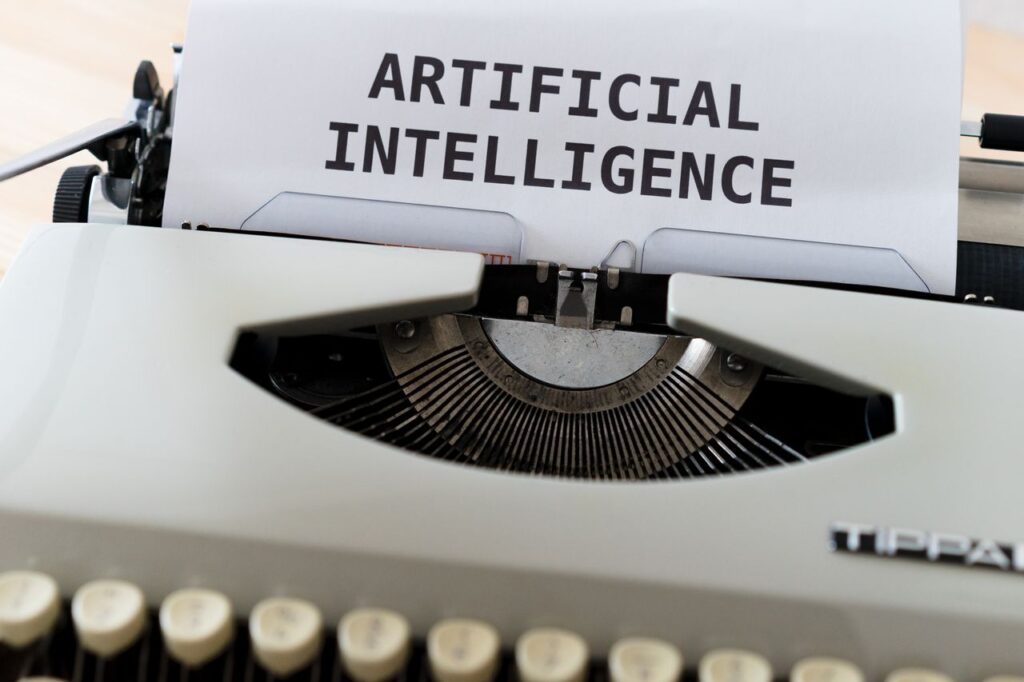
There is a difference between using AI to assist your thinking and making AI think for you. Many people do the latter without realising it. AI does a very good job, but when we start using it for basically every task and every day of our thinking, that is where we all make a mistake. At its best, AI functions as a tool. It can assist, support, and even improve certain parts of our writing, but it cannot replace the emotional intelligence, lived experience, cultural understanding, and genuine creativity a human writer brings.
A bot can generate words, but a human gives them meaning.
How we, as writers, approach AI determines how we use it to sharpen our writing. Total dependence pushes us to extremes that don’t serve us well, but when we treat AI as a tool rather than a substitute, we stay in control; content isn’t valuable simply because it is grammatically correct or beautifully structured. It is valuable when there is something worth saying.
This is what separates writers who use AI well from writers who make it their substitute. The former gives AI an opinion to work on, while the latter shows up waiting for AI to give them the opinion.
AI as the Ultimate Co-pilot
There is real satisfaction when using AI as a co-pilot. As a brainstorming partner, AI becomes your thinking companion; it gives you structure and speed when you hit creative blocks and suggests topic angles and research questions.
For productivity, it helps you repurpose one strong idea into different formats across several platforms, extending your line of thinking and leaving room for more creativity. When used for learning, it becomes a coach: improving our writing skills, explaining grammatical rules, and suggesting alternative sentence structures. Now, while we try to embrace the qualities AI gives when used as our co-pilot, those same qualities can also make it dangerous for us if we aren’t mindful of every output we get from it. Its smooth, fast and polished response can trick us into mistaking “error-free” for “good”.
One of the greatest dangers of AI is not poor writing, but letting its convenience replace our originality and voice. Most times, that slightly imperfect phrase we feel cringe about is often more human than the perfectly refined paragraph AI gives us. Writing is not just about producing content but a form of thinking. When we let AI think for us, the result is a polished piece that sounds perfect but lacks depth, and once your readers notice the lack of originality, they start to question every other piece you’ve written.
The second danger is volume over value. One question every writer should ask every time they work on an article with AI is whether they are adding value or simply adding volume, because AI has made it incredibly easy to write thousands of words in one go. But writing more content does not necessarily mean delivering better content. You can write 5 copy pieces with AI, and just 1 article carries valuable content. Your audience doesn’t need volume; they need clarity, wisdom, and authenticity. A piece with valuable tips is better than a week of polished AI copy, and your audience can usually tell the difference from the introduction.
The Human-AI Partnership

Some people believe AI will destroy creativity, and others want AI to automate almost everything, but what if the future of content writing is a partnership that requires wisdom? Our future won’t belong to the writer who refuses to use AI or the writer who lets AI do everything either. It will belong to the writer who understands the difference between assistance and dependence; uses technology to save time without letting it steal their voice; and understands that creativity isn’t just the ability to produce words, but the ability to say something meaningful. That skill may sound easy, but it’s easy to lose when the fastest response starts to look like the right response.
So how do we actually build this balance?
Thankfully, Nigeria’s creative ecosystem is already showing us a version of it. Creatives now use AI to explore ideas, refine scripts, spark research, and reduce repetitive work, while retaining control over their opinions, research, experiences, cultural understanding, and final creative decisions. The goal is not to keep AI out of the creative room; it is to keep it there as a tool, not a substitute. Here are some rules you can build on to maintain the AI balance:
1. Write your first draft yourself
Before you ask AI for ideas, spend a few minutes thinking and writing about the piece yourself. Allow yourself to brainstorm before asking AI to help structure it. It doesn’t have to be perfect; it just has to be yours, because most of the time that’s where authenticity and voice live. We do not have to lose the skill of critical thinking just because a tool has made it easier.
2. Use AI to challenge your ideas.
Often, we use AI not as a thinking partner but as something that agrees with our work and makes our writing sound smoother, missing one of its greatest uses: disagreement. Instead of saying, “Write this for me,” try asking: “What is the weakest part of this argument?” or “Give me a perspective that challenges my position.”
A good co-pilot doesn’t just say you’re on the right road. Sometimes, it points out a better one.
3. Protect your voice.
Your voice is more than the words you use; it is your identity. It comes from your experiences, your culture, your observations, your personality and emotions. AI can help polish your voice, but it shouldn’t erase your personality, because that is what helps your audience recognise your work and trust it over time.
4. Always take the work back.
This is the most important rule. After AI has given a few corrections on your piece, read it out loud to yourself and ask: “Does this sound like me?”
“What lesson can I gain from this piece?”
“Would I still have something to say if AI had never existed?”
If the answer is yes, you have successfully used AI as a co-pilot; if these questions are hard to answer, it may have stopped being your assistant and become your substitute. You can also test run with professional editors or proofreaders here at Rapt Writing Services.
5. Verify before you publish.
Not everything that sounds intelligent is true, and not everything polished deserves to be published. Think, Research, Read, and Verify. AI can help you get somewhere faster, but it should never become your source of truth.
Conclusion
As writers, we should use AI to make our creative process easier, not let it take ownership. AI can help us find another angle when an idea feels stuck. It can point out gaps in our argument, suggest ways to structure our thoughts, or help turn one piece of content into different formats. What it cannot do is be the idea and voice behind everything we publish.
At Rapt Writing Services, we help writers find that balance. We sit with your story and make it worth telling to your various audiences. Suppose you want to write pieces that make your audience feel seen and heard. Reach out to us today, and let us transform your writing skills and turn your draft into a masterpiece of Art and originality.
This was such an insightful read. Thank you Rapt.
This is a timely write piece for a time like this. Helping us writers know when to involve AI and when to sit with our work to bring out originality. Thank you!🥹🥹
Thank you. Do well to share with other writers.